
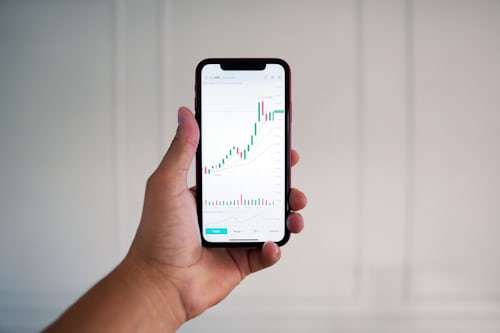
If you want to trade successfully in the long term, it is important to be aware of the opportunities but also the risks that these financial products entail.
In the following, you will learn about the opportunities and risks of trading CFDs.
Opportunities
- Low capital investment
- Transparent pricing
- High profits can be realized through leverage effect
- Profit from falling and rising prices
- Large selection of underlyings
- (e.g. foreign exchange, shares, commodities etc.)
- Trades can be placed around the clock
- Low trading costs
Risks
- Speculative financial product: leverage effect can lead to high losses
- Possibly high financing costs (can be very high for long positions held overnight)
Risks in CFD trading - what to watch out for?
CFD trading undoubtedly offers high return opportunities, because the use of leverage multiplies the performance of the underlying assets in Exness login area. However, if the price develops in the opposite direction, leverage can also lead to high losses. An example will illustrate this:
Investment amount: 50,000 euros
Leverage: 1:100
Margin: 500 Euro
Share price: 10 Euro
If you now buy CFDs of a stock with a price of 10 Euro for 50,000 Euro and the price falls against expectations to 9.80 Euro, your loss situation looks as follows:
Share price: 10 Euro 9,80 Euro= -2,00%
Investment amount: 50,000 Euro 49,000 Euro= -2.00%
Actual capital: 500 Euro
Loss: 500 Euro -500 Euro= -200%
In this case, your security deposit would be lost and you would have to add money. To avoid such a case, a stop-loss limit is usually set. This can be chosen in such a way that in the worst case the margin is completely used up or even a smaller loss is incurred.

Avoiding losses in CFD trading
Regardless of the strategy you follow, the stop loss is absolutely necessary to keep losses low. With a stop loss order, the CFD position is automatically closed at the next possible price when it reaches a certain level. Many CFD brokers even use stop loss limits automatically to limit client losses and keep credit risk low.
Tip: When setting stops, it makes sense to be guided by prominent points in the chart.
A rule of thumb is to take no more than 1% risk per trade. Once you have found a good entry point and defined the price for your stop, choose your position size so large that the maximum loss is limited to 1%. Now, a maximum of five positions should be taken in parallel, so that the total risk amounts to a maximum of 5%. This risk spreading is a great advantage of CFD trading.
Why do so many advise against CFD trading?
The great profit opportunities that lure in CFD trading, tempt many traders to imprudent actions. Gladly the account is over-leveraged with the hope to make the one mega-trade that should change everything. Psychological aspects such as greed, anger over losses or overestimation of one's own opinion are responsible for these and similar actions.
However, if you want to remain profitable over a longer period of time, you have to refine your risk management and resist the temptation to gamble. In the media, CFD trading is often equated with going to the casino or mentioned in the same breath as the financial crisis. But such statements are little objective. Despite the risks, which will be explained in more detail below, it is a serious financial market instrument that is very transparent.